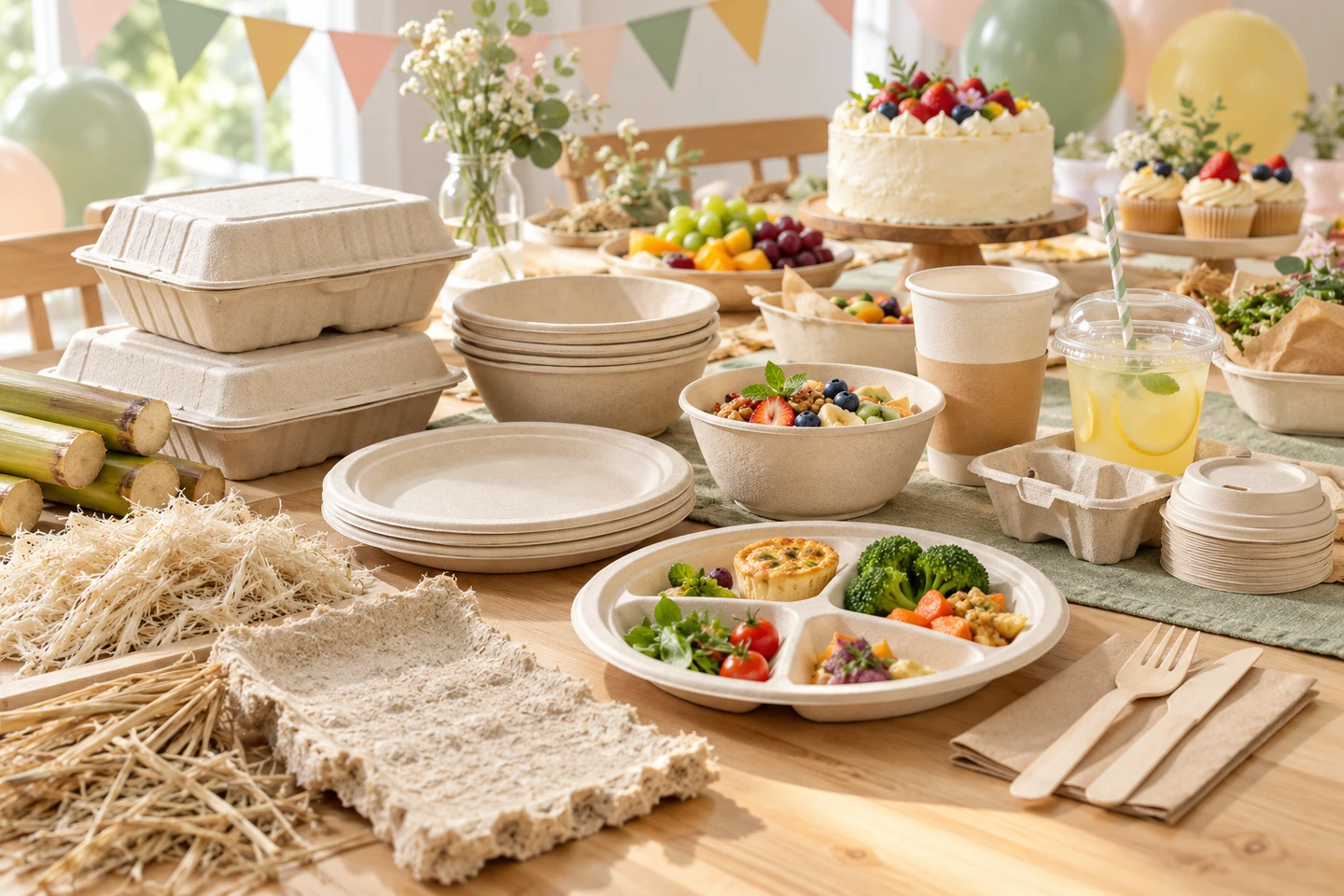
Disposable party tableware is a core party supplies category and the one under the strongest pressure to replace plastic. More markets are restricting single-use plastic cutlery, straws and cups, turning eco materials from a marketing angle into an entry requirement in some markets.
Mainstream alternatives and where they fit
- Moulded pulp: plates, bowls, trays. Substantial feel, compostable, natural appearance — good for differentiation.
- FSC-certified paper: plates, cups, napkins, straws. A mature supply chain with relatively controllable cost — currently the most common compliance route.
- Bio-based materials such as PLA and CPLA: cutlery and lids. They look close to plastic and suit scenarios where the user experience must be preserved.
- Bamboo and wood: cutlery, skewers, decorative pieces. Strong natural character, suited to premium and nature themes.
- Coated degradable paper cups: must satisfy both water resistance and compostability, which is technically demanding.
The reality of cost differences
Eco materials generally cost more than conventional materials at the same specification, and the gap depends on material and craft. Paper straws and FSC paper plates are relatively contained; PLA cutlery and compostable coated cups show a more noticeable gap. The common purchasing approach is layering: keep conventional materials in basic lines to protect the price band, and use eco materials in hero and premium lines for differentiation.
Compliance questions to settle before buying
- Claims must match evidence: compostable or recyclable claims need supporting tests or certification, not just wording on the pack.
- End-use requirements: migration testing for food contact materials differs from ordinary products and must be agreed before ordering.
- Local regulation: plastic bans and exemptions differ by market, so follow the rules of your destination market.
- Performance trade-offs: eco materials differ from plastic in oil resistance, heat resistance and load strength, which must be validated at sample stage in the real use scenario.
How we handle it
For categories involving food contact, environmental claims and children's products, we do not claim certificates or test results we have not obtained. Which test is required and which institution issues it is confirmed before ordering and written into the order. The short-term cost is more back-and-forth; the long-term benefit is avoiding delisting or fines after going on shelf.
Advice for buyers
If your market has begun restricting single-use plastic, plan eco materials as a baseline rather than an option. The earlier they enter your regular supply, the easier the cost negotiation, and the less likely you are to be forced into a rushed switch when rules tighten.